

How PRP Works
1
Draw: A small amount of blood is drawn from your arm.
2
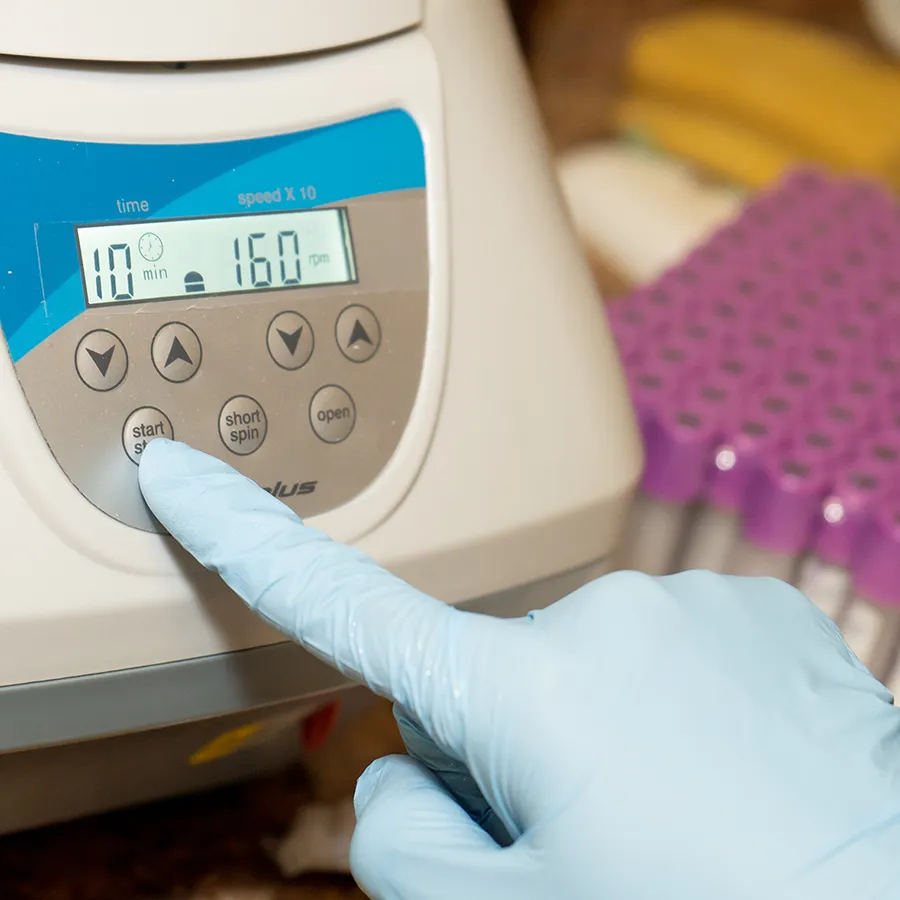
Concentrate: The blood is spun in a centrifuge to separate the plasma and concentrate the platelets well above normal levels.
3
Inject: Using image guidance, the PRP is injected precisely into the injured area.
Because PRP comes from your own blood, the risk of allergic reaction is very low.
Conditions PRP May Help

Tennis elbow (lateral epicondylitis) and golfer's elbow
Rotator cuff tendinopathy and partial tears
Achilles and patellar tendinopathy
Knee osteoarthritis
Ligament sprains and muscle strains
Shoulder pain after injury
PRP vs. Steroid Injections
Steroid (cortisone) injections reduce inflammation quickly but don't promote tissue repair, and repeated steroid injections can weaken tendons. PRP aims to support the body's natural healing response, so results build more gradually.
FAQs
What can I expect after PRP?
Some people improve over time, and some conditions need more than one injection. Your doctor will talk with you about what to expect.
What is recovery like?
Some soreness afterward is common. Avoid anti-inflammatory medications (such as ibuprofen) before and after treatment, as your doctor directs.
Can I have more than one PRP injection?
Yes. Some conditions need more than one injection. Your doctor will talk with you about what to expect.
Is PRP painful?
You may feel pressure and some soreness. Local anesthetic is used to keep you comfortable.
Related: Rotator Cuff & Tendon Repair · Knee Pain · Sports Injuries